How Did Barbados Get Its Name? The Bearded Clue
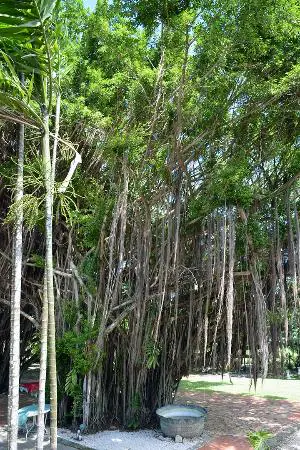

A banyan-like tree draped in long, ropey roots may not sound like the beginning of a nation’s story. Yet those hanging roots are the most widely accepted answer to how did Barbados get its name? Long before beach hotels, rum shops, and a bustling cruise port, early European sailors encountered an island whose trees appeared to wear beards.
The name has lasted for more than five centuries, but the full story is not quite as tidy as a signboard might suggest. Barbados was named from an outsider’s first impression, likely in Portuguese, then shaped by maps, colonization, and the people who made the island their home. To understand it properly, look beyond the spelling and into the landscape.
How Did Barbados Get Its Name?
The name Barbados is generally traced to the Portuguese phrase Os Barbados, meaning “the bearded ones.” Most historians believe the “beards” referred to the long aerial roots of the bearded fig tree, Ficus citrifolia. These roots descend from branches in tangled curtains, creating the appearance of a tree with a generous, windswept beard.
Portuguese navigators were sailing through the Caribbean during the early 1500s, although they did not settle Barbados. The island appeared on early European maps as “Los Barbados” or a close variation. Spanish mapmakers and sailors also used the name, and the English later adopted it when they established their first permanent settlement in 1627.
That much is the familiar version. The interesting part is that there is still room for honest uncertainty. Records from this period are incomplete, names changed from map to map, and Europeans regularly labeled places according to what caught their eye from a ship or along the shore. Some accounts have suggested the name could have referred to bearded Indigenous people, or even the surf breaking in white lines around the coast. Those ideas are repeated from time to time, but the bearded fig tree remains the strongest and most accepted explanation.
Meet the Tree Behind the Name
The bearded fig is a native Caribbean tree with a habit that makes sense once you see it in person. It begins life high in the branches of another tree, then sends roots downward toward the ground. Over time, those roots can thicken into a dramatic lattice around the host tree. Mature specimens offer deep shade, habitat for birds and insects, and plenty of character.
For sailors approaching a heavily forested island, these trees would have been a memorable sight. Barbados was once much more densely wooded than it is today, with native forest spreading across areas that later became cane fields, estates, villages, and roads. The bearded fig would not have been a small botanical detail. It was part of the island’s visual identity.
You may still spot fig trees and other great old trees around the countryside, gullies, and historic properties, though not every hanging-rooted tree is a bearded fig. Barbados has changed enormously since the 1500s. Sugar cultivation, settlement, storms, development, and generations of land use have reshaped the landscape. Still, the island’s name preserves a little piece of that earlier green world.
A Portuguese Name for an Island With a Much Older Story
The naming of Barbados did not mark the beginning of Barbados. Indigenous peoples were visiting and living across the Caribbean long before European ships arrived. Archaeological evidence connects Barbados to Amerindian communities, including Saladoid and later Kalinago peoples, who traveled the sea routes linking the islands and northern South America.
By the time the English arrived in 1627, Barbados was not simply an empty place waiting to be “discovered,” despite the language used in many old colonial accounts. It was an island with a natural history, Indigenous connections, and a position within wider Caribbean movement and trade. The English settlement brought catastrophic changes: plantation agriculture, the forced transport of enslaved Africans, land clearance, and a colonial system whose effects remain woven through the island’s culture, economy, and landscape.
That is why a question about a name can open into a much bigger conversation. “Barbados” is Portuguese in origin, but Bajan identity is not a European footnote. It is a living, proudly Caribbean identity created through African heritage, resilience, creativity, migration, faith, food, language, music, and community.
From Os Barbados to Barbados
Language traveled almost as quickly as ships. Portuguese used barbados for “bearded,” while Spanish records commonly used “Los Barbados.” English settlers eventually settled on Barbados, dropping the article and making the name their own in English usage.
The shift is a reminder that place names are rarely fixed from day one. They pass through different languages, maps, governments, and local voices. Even today, visitors may hear Barbados affectionately called “Bim” or “Little England,” though neither captures the whole island. “Bim” is a beloved informal name whose exact origins are debated, while “Little England” reflects the island’s long British colonial association. Barbados became a republic in 2021, an important modern milestone that reflects its continuing journey on its own terms.
The official name remains Barbados, but locals are Barbadians or Bajans. If you are visiting, “Bajan” is the word you will hear most often when people are talking about the culture, food, accent, humor, and unmistakable island spirit.
Where to See the Name’s Landscape Today
You do not need to stand in front of one particular tree to appreciate the story. The better approach is to notice how Barbados changes as you move through it. The island is compact, but its landscapes have distinct personalities.
In and around Bridgetown, historic streets reveal another layer of the name’s story: ships, trade, empire, migration, and the port that connected Barbados to the wider Atlantic world. In the countryside, old estate lands and cane fields hint at the dramatic transformation of the original forest. On the east coast, places such as Bathsheba, Hackleton’s Cliff, and Edge Cliff show a wilder Barbados, shaped by Atlantic wind, coral limestone, and deep gullies.
The island’s trees deserve a little attention too. Pause beneath a broad canopy, look for birds moving through the branches, and notice how much life gathers in the shade. Barbados is famous for its coast, rightly so, but its inland nature tells stories that do not fit on a postcard.
A guided ride, hike, or walk can make those connections easier to spot. Rather than racing from one photo stop to the next, you have time to hear why a ridge mattered, how an estate changed a parish, or what grows along a gully. At eBike Barbados, our guides keep the atmosphere relaxed, but they are serious about sharing the real island – including the complicated history behind the beautiful views.
Why the Name Still Matters to Visitors
It is tempting to treat a place name as a quick bit of travel trivia. “Bearded trees, got it,” then back to the sun lounger. But Barbados is more rewarding when you let the details lead somewhere.
The name points to a lost and surviving natural world. It points to Portuguese and Spanish navigation before English settlement. It also points to a Caribbean island whose history cannot be reduced to colonial chapters alone. Every parish road, market, churchyard, cane field, fishing village, and cliff path adds another part of the picture.
So when someone asks how Barbados got its name, tell them about the bearded fig tree. Then, if you have time, tell them that the island is far more than the first name a passing sailor wrote on a map. The best way to meet Barbados is to get out from behind the resort gates, follow a road lined with old trees, and let a local story surprise you.