Bridgetown At A Glance: A Signature Colonial Space
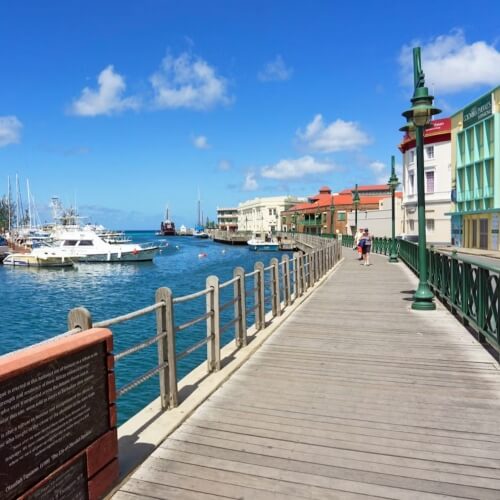

Bridgetown At A Glance: A Signature Colonial Space
The year was 1625, when the first English settlers happened to land on the west coast of Barbados, when a gale force wind blew them off course to this tropical paradise. It would take two years before this group of Englishmen started a settlement at what would later be known as Holetown.
Subsequently, in the year 1628, another group of Englishmen sailed from London to Barbados to start their own settlement on the island. After some turmoil and cannon fire between English brothers, this second group, being forced out of Holetown, landed at what would later become known as Bridgetown, the capital of England’s earliest and most prosperous colony in the Caribbean region.
The History & Heritage of Barbados and Its Capital City
The history and heritage of Barbados and its capital at Bridgetown is rich and flavoured with the workings and development of a colonial port town of the day, underpinned by the dictates of Empire. In an era when Europeans were invested in finding new lands across the world with mineral wealth and exotic products to enhance and enrich their homelands, these far-flung places became fair game.
As Englishmen flocked to Barbados, seeing it as the land of opportunity, within thirteen to fourteen years of settlement sugar cane would emerge as the fulcrum of English positioning across the globe. To this end, Barbados would soon be regarded ‘the jewel in the English crown’ – the richest colony within the English Empire.
Bridgetown: The Hub of English Shipping and Trading
From the 1620s Bridgetown was the major hustling, bustling, lived-in English port town in the region, England’s principal colony. Carlisle Bay was a busy roadstead, as English ships plied a thriving trade with Barbados, which was the trans-shipment point for the southern English Caribbean islands. The town also served as the main drydocking station for English vessels into this region. These factors became partly responsible for the increase in shipping both internationally and regionally, with Bridgetown being the hub of English shipping and trading. Between the 1640s and early 1700s, Bridgetown out-performed Boston Harbour in terms of trade and economic influence. This status evolved out of the major production of and trade in sugar, rum and molasses. Long spider carts manned by at least six men and stacked high with barrels of rum, molasses and sugar were maneuvered through the alleyways and main throughfares of the town, making way from the well-stocked Bridgetown warehouses to the wharf and across Carlisle Bay to the vessels waiting to receive that precious cargo. Loaded, these English ships, propelled by the north-east trade winds, made their way to London, Bristol and other English ports with the bounty that would change the face of the economic existence of England and affect the status of the world.
Claudette Levi-Farnum
Historian