The History of Rumshops in Barbados
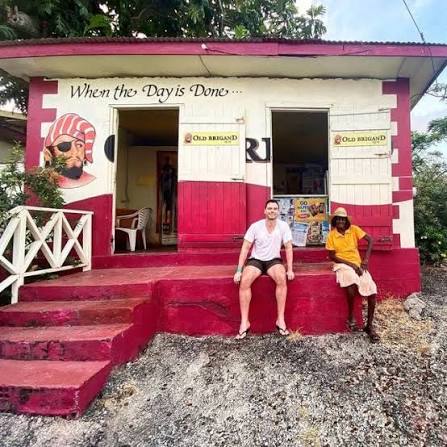

A rum shop can be no bigger than a front room with a counter, a cooler, a few bottles, and a domino table outside. Yet the history of rumshops in Barbados is much bigger than the buildings themselves. These are places where a village hears the news, debates cricket, marks a hard day’s work, catches up with neighbors, and keeps an eye on the road. For visitors, they offer a glimpse of the real island – provided you arrive with curiosity, good manners, and no rush.
Where rumshops began
Barbados has been tied to rum since the early years of its sugar industry. By the mid-1600s, planters and distillers were turning molasses, a byproduct of sugar production, into what was first called “kill-devil”. The name was dramatic, but the spirit became a practical commodity: affordable, long-lasting, easy to transport, and deeply connected to the island’s colonial trade.
That trade was built on an extremely unequal plantation system and the forced labor of enslaved Africans. Sugar generated great wealth for colonial landowners and merchants, while enslaved people endured violence, deprivation, and little control over their own lives. Rum cannot be separated from that history. It traveled through Atlantic trade networks, was consumed locally and abroad, and became part of an economy shaped by enslavement.
After emancipation in 1834, Barbados changed gradually rather than all at once. Formerly enslaved people continued to face restricted opportunities, low wages, and limited access to land. Villages grew around estates, churches, schools, and small businesses. In this setting, the humble rum shop developed into a familiar neighborhood institution. It was often run from a family home or a small roadside building, serving drinks alongside everyday items such as bread, canned goods, cigarettes, and snacks.
A rum shop was not designed by a hotel architect, and that is part of its appeal. Its character came from the person behind the counter, the regulars on the bench, the music on the radio, and the conversations that unfolded without a schedule.
The history of rumshops in Barbados is social history
To call a rum shop simply a bar misses the point. It has long been an informal community center. Before smartphones and social media, it was a reliable place to find out whose crop had come in, what was happening at the cricket ground, which bus was running late, or how a neighbor was getting on.
For cane workers, fishermen, tradesmen, and other laborers, the shop could be a stop before heading home or a place to rest after work. That does not mean every rum shop was the same. Some were quiet daytime spots where older men played dominoes. Others came alive on a Friday night, with loud talk, a game on television, and a sound system doing its best work. In many communities, women have also owned and operated shops, setting the rules of the house while building a business that supported their families.
The famous Barbados pastime of dominoes belongs in this picture. A domino game can look leisurely from a distance, but it is rarely silent. Tiles land with a crack, advice arrives uninvited, and a good hand may be celebrated with enough commentary for the entire parish. Cricket gets similar treatment. A shop television during an important match can turn a few stools and bottles of Banks beer into a grandstand.
These spaces have also carried serious conversation. Barbadians have discussed politics, religion, work, migration, local disputes, and island affairs in rum shops for generations. The debate may be lively, but there is usually an unwritten code. Listen before speaking. Do not mistake friendliness for an invitation to dominate the room. And never assume that every person there is waiting to become part of a visitor’s vacation story.
From shop counter to cultural landmark
Rum shops became recognizable symbols of Barbados because they are so rooted in ordinary life. Their hand-painted signs, bright walls, wooden shutters, bottle displays, and roadside benches are visually memorable, but their real value is cultural. They represent small enterprise, hospitality, humor, resilience, and the ability to make community from whatever space is available.
They also tell us that Barbados is more than the polished coast seen from a resort. Along inland roads and in older villages, a rum shop may sit near a playing field, a church, a bus stop, or a former estate route. Those locations are reminders of how people have moved through the island for centuries – on foot, by cart, by bus, and now by car, bicycle, and eBike.
What changed, and what has stayed the same
Like every local institution, rum shops have adapted. Some have expanded into mini-marts or neighborhood restaurants. Some serve food, host small events, or carry newer spirits and imported beers alongside local favorites. Others have closed as owners retire, customers move away, or operating costs rise. Their survival often depends on the community around them, not on a visitor’s idea of what an “authentic” shop should look like.
Tourism has brought fresh attention to rum culture, and that can be a good thing when it supports local businesses respectfully. Visitors are often drawn to the easy conversation and character that large bars cannot reproduce. But there is a trade-off. Once a place is treated only as a photo stop, the people who made it meaningful can be pushed into the background.
The best experience is rarely about finding the oldest-looking shop or ordering the strongest pour. It is about understanding that you have entered someone else’s neighborhood rhythm. Buy something, greet people properly, ask a simple question, and let the conversation take its natural course. If the room is quiet, there is no need to fill it. If a domino game is underway, enjoy the spectacle without leaning over the table like a referee.
Rum, food, and the Bajan lime
Rum shops are closely tied to the Bajan idea of a “lime” – an easygoing social gathering with no need for a grand occasion. A lime may involve a drink, but it is really about company. It can happen at a shop counter, on a veranda, beside a cricket field, or under a tree after a community event.
Food often completes the scene. Depending on the shop and the day, you may find cutters, fish cakes, fried flying fish, pudding and souse, or other familiar bites. Not every rum shop has a kitchen, and not every local favorite will suit every visitor’s palate. That is perfectly fine. Ask what is available, be open-minded, and remember that a rum shop is not a themed restaurant. It operates on its own terms.
Rum itself has changed as well. Barbados now has an international reputation for fine aged expressions and distillery experiences, yet a modest bottle shared among regulars remains part of the everyday story. The point is not prestige. It is the ritual of gathering.
How to visit with respect
If you encounter a rum shop while exploring Barbados, a little local etiquette goes a long way. Start with a greeting – “Good afternoon” or “Good evening” is never wasted. Ask before taking photographs, especially if people are seated, playing dominoes, or working behind the counter. Be patient if service is unhurried; this is a neighborhood space, not an airport lounge.
Drink responsibly, particularly if you are cycling, hiking, driving, or heading back to a cruise ship. Barbados is welcoming, but its roads and coastal terrain still require clear judgment. On an active outing, save alcoholic drinks for after the ride or choose a soft drink instead. A good local guide will happily point out the stories behind a village stop without making alcohol the center of the experience.
For guests who want to see beyond resort corridors, routes through the countryside can reveal how history sits in plain sight: cane fields, old plantation roads, churches, village shops, and Atlantic-facing communities. eBike Barbados builds that kind of local context into its small-group excursions, with the practical benefit of transportation, safety support, and a pace that lets you notice more than the view.
A rum shop is not a museum piece, and it does not need to be polished up for anyone. It is a living part of Barbados, shaped by difficult history, everyday enterprise, and generations of Bajan conversation. Pull up a chair only when it feels welcome, order with respect, and leave room for the island to tell its own story.