Rihanna’s Relationship With Barbados Carnival
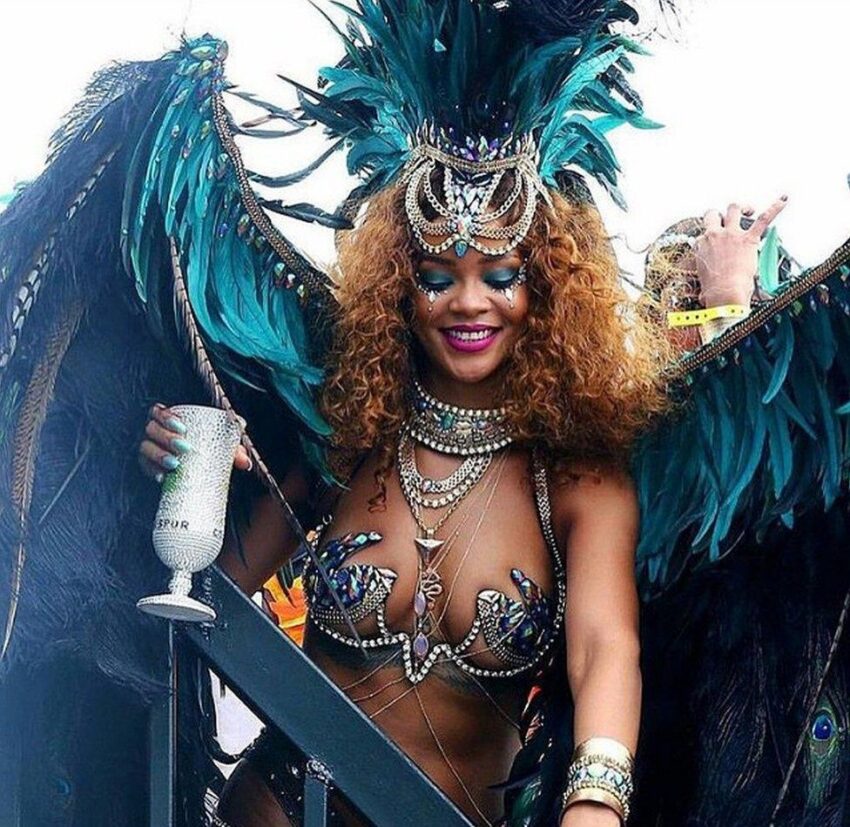

When Rihanna steps into the Grand Kadooment crowd, covered in feathers, jewels, paint, and the kind of pure joy that needs no press release, the images travel far beyond Barbados. Rihanna’s relationship with Barbados Carnival has helped introduce millions of people to the island’s biggest cultural celebration. But to understand why those moments matter, visitors need to look beyond the celebrity photographs and into the history, music, and community spirit of Crop Over.
For Bajans, this is not a borrowed carnival experience or a show put on for cameras. Crop Over is a season of release, creativity, competition, and serious national pride. Rihanna may be its most famous global ambassador, but the festival belongs to the people who build costumes, write the music, practice the choreography, judge the calypso, and take to the road each summer.
What Barbados Carnival Is Really Called
Visitors often call it Barbados Carnival, and people will understand exactly what they mean. Locally, though, the festival is known as Crop Over. Its roots reach back to the end of the sugar cane harvest, when enslaved Africans and later plantation workers marked the close of another grueling season with music, dance, and gathering.
Over time, Crop Over changed. The festival waned in the mid-20th century as the sugar industry declined, then was revived in the 1970s as a national cultural celebration. Its modern form includes calypso and soca competitions, visual arts, markets, community events, and the spectacular Grand Kadooment Day parade.
That history gives the celebration its weight. The glitter is real, certainly. So are the basslines, the expertly designed costumes, and the infectious energy. Yet Crop Over also carries stories of labor, survival, emancipation, and a people continually shaping their own cultural identity.
Rihanna’s Relationship With Barbados Carnival Goes Home
Rihanna was born Robyn Rihanna Fenty in Saint Michael, Barbados, long before becoming one of the world’s most recognizable performers and entrepreneurs. Her international career has never erased that connection. She has repeatedly spoken with pride about being Bajan, and her appearances at Crop Over have made a powerful visual statement: global fame does not require cutting the ties to home.
When she participates in Grand Kadooment, Rihanna is not positioned above the parade as a distant guest of honor. The images that resonate most show her in the crowd, moving with a band and enjoying the road like countless other revelers. That distinction matters. Crop Over is participatory. Its heart is not spectatorship from behind a rope. It is movement, music, community, and people making space for joy together.
Her presence has undoubtedly expanded international awareness of the festival. Travelers who first saw a viral Crop Over photo may later ask where Barbados is, when Grand Kadooment happens, and whether the island has a culture beyond postcard beaches. Those are good questions, because the answers lead toward a much richer Barbados.
Still, it is worth keeping the scale in perspective. Crop Over was vibrant before Rihanna became a global star, and it remains much bigger than any one person. The musicians, designers, artisans, DJs, dancers, vendors, and cultural organizers are the people who keep its pulse strong year after year.
More visibility, more responsibility
Celebrity attention can be a gift, but it changes the conversation. A visitor who arrives expecting a Rihanna sighting may miss the very thing that makes Crop Over memorable. There is no guaranteed celebrity appearance, and there should not need to be one.
The better approach is to come curious. Listen to the music. Learn why the calypso tent matters. Admire the work behind a costume, which can take months of design and hand finishing. Support local vendors, respect personal space in crowded events, and remember that you are joining a living Bajan celebration, not walking onto a film set.
Grand Kadooment Is Only One Part of Crop Over
Grand Kadooment, traditionally held on the first Monday in August, is the climax that receives the biggest international attention. Mas bands take to the road in elaborate costumes as trucks pump soca across the route. It is colorful, loud, sweaty, and wonderfully high-energy. For many visitors, it becomes the holiday story they tell for years.
But Crop Over is a full season, not a single day. Its calendar can include calypso showcases, soca competitions, craft events, food, fetes, and the visual-art traditions associated with the festival. Exact programming changes from year to year, so travelers should plan around confirmed dates rather than assuming every event follows the same schedule.
That is also where the trade-off comes in. Visiting during Crop Over offers an unmatched burst of culture and excitement, but it can mean higher demand for accommodations, busier roads, and less of the quiet island rhythm some travelers prefer. If you love music, color, and a social atmosphere, the season can be magic. If your ideal Barbados day is an empty coastal trail followed by a slow lunch, consider pairing festival events with time in the countryside.
See the Barbados Behind the Feathers
Crop Over makes more sense when you see the island that shaped it. Sugar cane country is not merely scenery on the drive between attractions. The old estates, rolling fields, and rural communities help tell the story of the labor system that gave the festival its beginnings.
In Bridgetown, the historic streets, markets, churches, and public squares reveal another layer of Barbados: trade, migration, faith, enterprise, and resistance woven through a compact capital. A stroll through the city is a useful counterpoint to the parade route. It shows that Bajan identity has always been made in everyday places, not only on grand occasions.
Then there is the east coast, where Atlantic waves pound against dramatic rock formations around Bathsheba and ridges open onto wide, windswept views. The landscape feels a world away from a packed Kadooment road, but it belongs to the same island story. Barbados is small enough to explore deeply, yet varied enough to keep surprising you.
For travelers who want cultural context without spending their whole vacation in traffic, a small-group outing can make a real difference. At eBike Barbados, local guides use countryside routes, historic communities, and scenic stops to share the stories that do not fit on a resort brochure. Pedal-assist eBikes make the island’s hills friendlier for mixed-ability groups, while included pickup and drop-off take the transport headache out of the day.
How to Experience Crop Over Respectfully
Come prepared for heat, movement, and crowds. Light clothing, sun protection, comfortable shoes, water, and a secure way to carry your phone are sensible basics. If you are joining a band, follow its instructions on costumes, meeting points, and timing. The day runs on festival energy, not always on your usual vacation schedule.
Give local culture room to lead. Ask before photographing people up close, particularly children, performers at work, or anyone who is clearly not posing. Do not reduce the experience to a costume photo. The sound systems, lyrics, dance styles, and parade traditions have meaning, and a little curiosity will take you much further than a quick clip for social media.
It also helps to build in recovery time. Grand Kadooment can be a long, exhilarating day under Caribbean sun. Plan a quieter activity for the following morning, whether that means a shaded walk, a relaxed swim, or a guided ride through the island’s greener interior. Barbados knows how to celebrate, but it also knows how to slow down.
A Better Way to Read the Famous Photos
The most lasting lesson from Rihanna at Crop Over is not that a superstar looks fabulous in feathers. We already knew that. It is that Barbados has a cultural confidence strong enough to remain visible in a global story without losing its local soul.
So if Rihanna’s Crop Over moments inspire your trip, let them be the beginning rather than the whole itinerary. Make room for a calypso lyric, a conversation with a Bajan guide, a ride past cane fields, and a meal from a neighborhood spot. That is where the island starts to feel less like an image and more like a place you have genuinely met.