The Story of the Jews in Barbados’ History
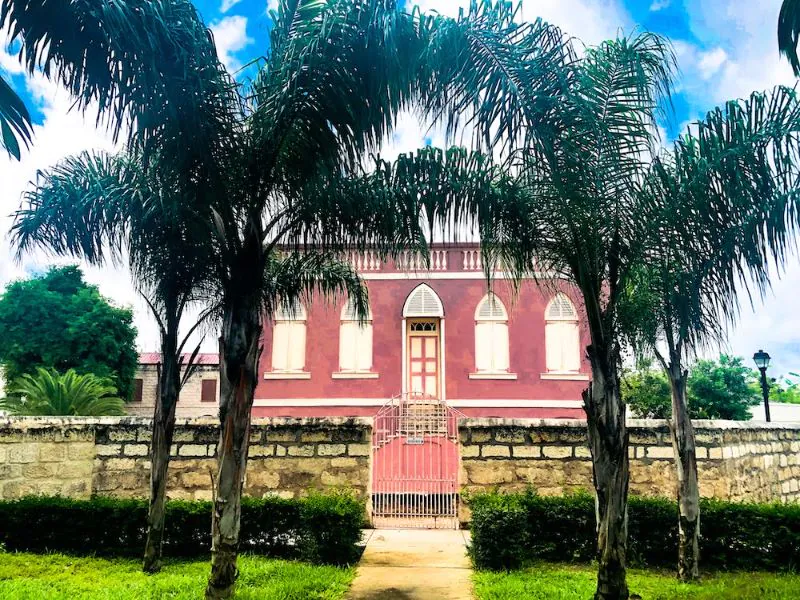

Bridgetown can feel like a place built for passing through: ships arrive, market stalls bustle, traffic rolls toward the coast. But pause near the old Jewish cemetery and synagogue, and the pace changes. The story of the Jews as it relates to the history of Barbados is not a side note tucked away from the island’s past. It is part of the story of trade, migration, religious freedom, sugar, survival, and the making of a Caribbean capital.
For visitors who want more than a quick photo stop, this is one of Bridgetown’s most revealing stories. It asks us to look beyond postcard Barbados and meet the real island – complex, connected, and shaped by people who arrived from many shores.
The Story of the Jews in Barbados’ History Begins at the Port
Barbados became an English colony in 1627, and by the middle of the 17th century, Jewish settlers were establishing a community in Bridgetown. Many were Sephardic Jews whose families had roots in Spain and Portugal and who had lived in places such as the Netherlands and Dutch Brazil before coming to the Caribbean.
That wider Atlantic journey matters. These were not isolated arrivals. They came with languages, commercial connections, religious traditions, and knowledge that traveled across oceans. Barbados, already becoming a major sugar-producing colony, was plugged into a vast and often brutal network of trade. Bridgetown’s harbor made the island a meeting point for goods, people, news, and ideas moving between Europe, Africa, North America, and the Caribbean.
The Jewish community built a synagogue known as Nidhe Israel, meaning “the scattered of Israel.” Its origins reach back to the 1650s, making it among the oldest Jewish congregations in the Americas. The present synagogue building is newer than the first structure, having been rebuilt after an early 19th-century hurricane, but the site carries centuries of memory.
Walking through this part of town, it is easy to see why location mattered. The synagogue stood close to the commercial heart of Bridgetown, not out on the edge of settlement. This was a working community woven into port life, business, family life, worship, and the daily rhythm of the growing town.
A Community Shaped by Opportunity and Restriction
The early Jewish population of Barbados found economic opportunity, but that does not mean life was uncomplicated. Like other non-Anglican groups in the English Caribbean, Jewish residents faced legal and social restrictions. Their civil rights expanded gradually over time rather than appearing all at once.
At the same time, members of the community participated in Barbados’s commercial world in different ways. Some were merchants, traders, artisans, and property holders. Several were involved in sugar production and trade, an industry inseparable from the forced labor of enslaved African people. That truth belongs in the story too.
History gets a little too tidy when it only celebrates old buildings and remarkable firsts. Barbados’s prosperity in the colonial period rested on slavery, and every community connected to the island’s economy existed within that system, whether through direct ownership, trade, finance, labor, or consumption. A thoughtful visit to Bridgetown should hold both realities: the resilience of a minority religious community and the human cost of the plantation economy around it.
That is not a reason to skip the story. It is precisely why the story is worth hearing properly. The past is more useful when it is not polished into a souvenir.
From Sugar Country to Bridgetown’s Streets
The connection between Bridgetown and the countryside becomes clearer once you understand how sugar transformed Barbados. Cane fields, windmills, estates, warehouses, and shipping routes were all parts of one system. Goods moved from inland plantations to the port, then outward across the Atlantic. Wealth flowed through town, while the labor that created it was largely extracted from enslaved Africans and their descendants.
On the island’s rural roads, history often appears in fragments: an old estate wall, a stone windmill, a former great house, or a churchyard standing above cane country. These places are beautiful, but they are not silent. A good local guide knows when to stop, when to point out what most visitors would miss, and when a lovely view deserves a more honest conversation.
That is the magic of seeing Barbados beyond the resort corridor. You begin to understand that Bridgetown’s streets, the parish countryside, and the Atlantic coast are all connected by the same layered island history.
Nidhe Israel: A Small Place With a Big Caribbean Story
The Nidhe Israel Synagogue and its cemetery are among the most meaningful heritage sites in Barbados. The cemetery’s weathered stones bear names and dates that trace generations of Jewish Barbadians. The synagogue speaks to continuity: a community maintaining faith and identity despite migration, storms, changing laws, and the shifting fortunes of a colonial port.
The site is also associated with a mikveh, or ritual bath, an important feature of Jewish religious life. Its presence offers a useful reminder that this was not merely a community of visiting merchants. It was a settled congregation building the institutions needed for family, worship, and communal life.
Visitors sometimes hear that Jewish settlers introduced sugar cultivation to Barbados. The fuller truth is more complicated. Jewish migrants from Dutch Brazil brought valuable experience and connections related to sugar processing and trade, contributing to the industry’s development. But the transformation of Barbados into a sugar colony involved many groups, colonial policy, land seizure, capital, and above all the enslavement of African people. One community did not create that entire system alone.
This kind of nuance makes the history more interesting, not less. It helps us see Barbados as a crossroads where people carried knowledge across borders, adapted to new conditions, and left marks that are still visible centuries later.
Jewish Barbadians and the Making of Modern Barbados
Over generations, Jewish Barbadians became part of the island’s civic, commercial, and cultural life. Like many small communities, their numbers rose and fell with migration and economic change. Families left for other Caribbean islands, Britain, North America, and elsewhere; others remained rooted here.
Their history also sits within Barbados’s larger movement toward a more inclusive society. The island’s political and social institutions changed slowly and unevenly through the 18th and 19th centuries, then more dramatically through emancipation, labor activism, universal adult suffrage, independence, and the continuing work of nation-building.
Bridgetown itself is a fine place to consider those layers. Its UNESCO-listed historic area contains colonial-era architecture, churches, markets, civic spaces, and former commercial streets. Yet it is no museum set behind a rope. People work, shop, worship, commute, and lime here. The city’s living energy is part of what makes its heritage feel real.
For cruise guests with limited time, this is one reason a guided walk can be far richer than wandering with a map. The best stories are not always announced by a giant signboard. A guide can connect a synagogue doorway to a harbor, a market lane to global trade, and a quiet cemetery to the families who helped shape the city around it.
How to Visit With Respect and Curiosity
When visiting a religious or historic site, dress modestly, follow any guidance offered on arrival, and remember that it is a place of worship and remembrance, not simply a backdrop for vacation photos. Ask questions, but be ready for answers that may be more complex than the version you heard at school.
It also helps to give yourself enough time. Bridgetown rewards unhurried attention. Notice the coral stone, the changing street names, the proximity of sacred spaces to shops and former warehouses, and the way the city opens toward the water. Barbados is small on a map, but its history is gloriously wide-ranging.
A Bridgetown historic walking tour with a knowledgeable Bajan guide can place this Jewish heritage within the wider story of the island, while keeping the experience easygoing and well organized for visitors. And if your Barbados plans include countryside trails or an eBike ride, carry that same curiosity with you. The history of the port did not stay in the port.
When you stand at Nidhe Israel, look beyond the age of the stones. Think of the sea routes that brought families here, the communities they joined, the system they navigated, and the Barbados they helped shape. That is where a visit becomes something more than sightseeing.