The History of the Chattel House in Barbados
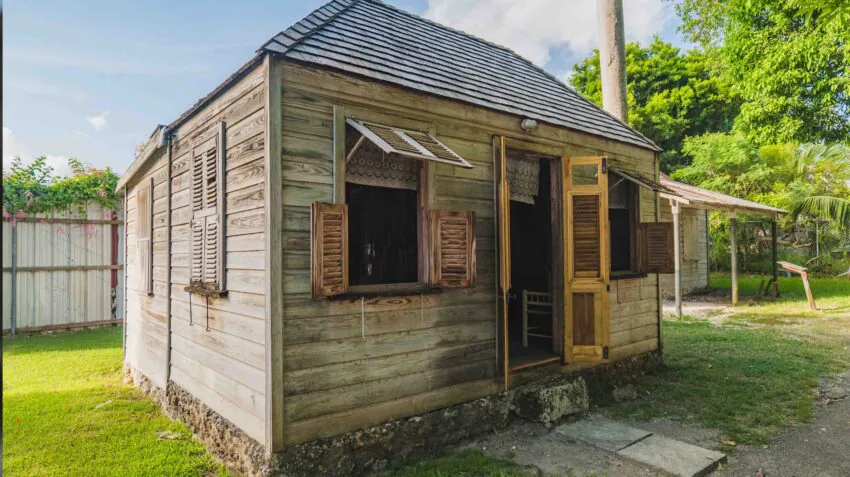

A chattel house can look cheerful at first glance: painted timber, a tidy gallery, decorative fretwork, perhaps a pot of crotons brightening the steps. But the history of the chattel house in Barbados is also a story of freedom, uncertainty, skill, and the determined Bajan wish to make a home on one’s own terms.
Travel through the island’s villages and cane-country roads and these small wooden houses appear in places a quick resort transfer may never reach. Their proportions are modest, yet they carry a big part of Barbados’s social history. To understand them properly, it helps to look beyond the colorful boards and ask a simple question: why were so many houses built to move?
What Is a Chattel House?
The more common historical spelling is chattel house, using the legal word “chattel,” meaning movable personal property. In Barbados, however, visitors may see and hear variations of the name, including “chattle house.” The meaning is the same: a timber house designed so that it could, when necessary, be dismantled and relocated.
Traditional examples were usually built in stages. A family might begin with a compact central room, then add a bedroom, kitchen, or front gallery as money and family needs allowed. The houses were often raised slightly above the ground on blocks, with a roof structure and wall panels that could be taken apart more easily than a stone building.
That practical design was not a quaint architectural choice. For many Barbadians, mobility was protection.
The History of the Chattel House in Barbados Begins After Emancipation
Chattel houses became especially significant after the abolition of slavery in the British Empire in 1834 and the end of apprenticeship in 1838. Emancipated people sought independence from the plantation system, including the chance to establish households beyond estate-controlled labor quarters.
Land ownership, however, was not evenly available. Many working people rented or occupied small plots of land while owning the dwelling they built on it. If a tenancy ended, or if conditions changed, a house that could be carefully dismantled, loaded onto carts, and rebuilt elsewhere gave a family a measure of security. The land might not be theirs, but the house could be.
This is why the chattel house should never be treated as merely a picturesque souvenir of the past. It reflects the realities of a society emerging from slavery, where land, work, and family stability were deeply connected. Its movable construction was an intelligent response to limited power and limited resources.
There is nuance here, too. Not every wooden home was moved, and not every chattel house belonged to the same economic circumstances. Over time, the form was adopted and adapted by families across different communities. Still, the association with post-emancipation self-determination remains at the heart of its story.
A House Built Around Family Life
A chattel house was often a living project rather than a finished object. As incomes improved, a household could add a room. As children grew, space could be rearranged. A porch might become the social center of the home, offering shade, breeze, and a place to greet neighbors passing along the road.
This incremental approach made economic sense. Instead of waiting years to afford a large, permanent structure, a family could build what was possible now and improve it later. In that way, the house grew alongside the people inside it.
From Simple Timber Boxes to Bajan Architectural Icons
The earliest forms were generally plain and functional, with steep roofs suited for shedding tropical rain and modest interiors arranged around daily life. As the style developed, carpenters added more detail: symmetrical façades, shuttered windows, ornate gable trim, verandas, and decorative wooden fretwork.
These details give many surviving chattel houses their distinctive character. They also show the talent of Barbadian craftspeople, who worked with imported and locally available timber, practical building knowledge, and an eye for proportion. A well-made wooden house had to stand up to heat, salt air, heavy rain, and hurricane-season winds. It needed ventilation, shade, and a roof that did its job without fuss.
Color became part of the visual language, too. Bright blues, greens, yellows, and pinks are often associated with Caribbean homes, but color should not be reduced to a tourist postcard. Paint protects timber as well as beautifying it, while individual color choices express pride, personality, and care for a home.
The traditional house also sits within a larger village landscape. Look for small gardens, fruit trees, kitchen yards, churches, rum shops, and footpaths connecting neighbors. Architecture is never only about walls and roofs. It tells us how communities organize life.
Why Some Chattel Houses Were Moved
The image of a house being carried down a road is one of the most memorable pieces of Bajan folklore, and it has a solid practical basis. Because the building was assembled from manageable timber components and rested on a simple foundation system, relocation was possible.
The process took labor, planning, and no small amount of community cooperation. Parts could be numbered, removed, transported, and reassembled on a new plot. It was not effortless, and it certainly was not an everyday event. But the option mattered.
Being able to move a home changed the balance of risk for tenants. It also reinforced a powerful idea: a family’s investment in its house did not have to disappear simply because access to a piece of land changed. The chattel house made ownership portable.
That said, the moveable-house story can be romanticized. Relocating a home was often prompted by financial pressure, tenancy disputes, or changing circumstances, not simply a desire for adventure. The ingenuity is real, but so are the hard conditions that made ingenuity necessary.
The Chattel House and Barbados’s Changing Landscape
By the twentieth century, concrete construction became more common across Barbados. Concrete could feel more permanent, required different maintenance, and offered advantages in a hurricane-prone region when properly built. For many families, replacing or expanding a timber house with a concrete one represented progress and security.
Yet the older form did not vanish. Some chattel houses were maintained, enlarged, or incorporated into newer homes. Others were lost to development, weather, neglect, or changing preferences. Today, preservation can be complicated. Restoring a historic wooden house costs money, requires specialized skills, and must balance authenticity with the needs of a modern household.
That is why the best way to appreciate these homes is with respect for the people who live in and care for them. A chattel house is not automatically an attraction, and a private yard is not a photo stop simply because it looks beautiful. The real value lies in seeing the house as part of an active community, not as a prop.
Seeing the Story Beyond Bridgetown
Bridgetown’s historic streets reveal major chapters of Barbados’s story: trade, colonial government, religion, commerce, migration, and emancipation. But the chattel house brings another chapter into focus – the history written in rural districts and working-class neighborhoods, where ordinary families shaped the island through persistence and practical knowledge.
On country routes, the setting adds context. A wooden house near former sugar lands can prompt conversations about plantation labor and post-emancipation settlement. A home tucked along a ridge or village lane can reveal how Bajans adapted to terrain, breeze, and neighborhood life. These are the details that make Barbados feel less like a beach backdrop and more like a living place with layers.
For visitors exploring by bicycle or on foot, slower travel is especially rewarding. You notice the scale of a front porch, the careful joinery under a gable, the way a road bends through a village, and the contrast between old timber structures and newer concrete homes. A knowledgeable local guide can offer the history without turning communities into a museum display.
At eBike Barbados, that kind of storytelling is part of what makes an island ride memorable. The electric assist helps mixed-ability groups handle the hills comfortably, leaving more energy for the views, the conversation, and the unexpected details along the way.
A Small House With a Big Legacy
The chattel house endures because it speaks to something larger than architecture. It is a record of people making room for themselves after emancipation, building gradually, protecting what they owned, and creating beauty without wasting what was available.
When you spot one on a Barbados village road, take a moment before reaching for the camera. Notice the craftsmanship, the additions, the paintwork, and the life around it. Then let the house remind you that some of the island’s most meaningful history is not behind a gate or inside a monument – it is still standing quietly in the everyday landscape.