The Church On The Cliff: The History of St. John’s

The Church On The Cliff: The History Of St. John’s
Set high on Hackleton’s Cliff, with the Atlantic rolling far below, St. John’s Parish Church is one of those Barbados places that makes you pause before you take a photograph. The history of St. John’s Parish Church in Barbados is not simply the story of a beautiful old building. It is a story of early English settlement, hurricanes, plantation-era wealth, enslaved labor, faith, remembrance, and an East Coast community that has kept gathering here for centuries.
For travelers who want to see a Barbados beyond the beach, this hilltop church offers a powerful sense of place. The view is grand, yes, but the real value is in looking closer: at the weathered coral stone, the old graves, and the landscape of cane fields and gullies that has witnessed so much island history.
The Early History of St. John’s Parish Church in Barbados
St. John’s was among the earliest parishes established in colonial Barbados. The parish dates to 1645, during the period when English settlers were spreading across the island and organizing local communities around parish churches. An early chapel stood on or near the present site, serving a population that was still small by later standards but growing quickly as the sugar economy took hold.
That first era was shaped by immense change. Barbados shifted from small-scale farming to a plantation society driven by sugar production and transatlantic trade. The wealth generated by sugar transformed the countryside, while the forced labor of enslaved Africans made that wealth possible. Churches such as St. John’s sat within this system. They were places of worship and community life, but they also stood in a society marked by profound inequality and brutality.
Visitors can still feel why this location mattered. The church is positioned on high ground in the island’s eastern interior, looking toward the Atlantic rather than the calmer Caribbean Sea. From here, the landscape feels less like resort Barbados and more like the working, rural island that has long existed beyond the hotel corridor.
Hurricanes, Rebuilding, and the Church Seen Today
Like many old Caribbean churches, St. John’s has not survived in one uninterrupted form. Earlier buildings were damaged or destroyed by storms and time, then rebuilt by successive generations. Barbados lies outside the main hurricane belt, but it is certainly not beyond the reach of powerful tropical weather. High winds, heavy rain, and salt-laden air have always tested buildings on the exposed East Coast.
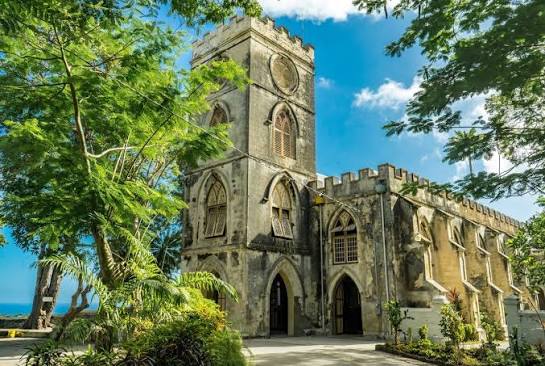
The church visitors see today was completed and consecrated in 1836. It is often described as the sixth church to stand on the site. Its Gothic-inspired design, pointed arches, substantial stonework, and elevated position give it a commanding presence without making it feel overly formal. This is a church built to endure, though the Caribbean has a way of reminding every building who is really in charge.
The structure is made largely from local coral stone, a material found throughout Barbados’s historic architecture. Look at the walls, buttresses, and details around the windows and you will see both the craftsmanship and the effects of nearly two centuries of sun, rain, and sea air. The building has been repaired and cared for over time, as any living historic site must be.
That is worth remembering when visiting heritage places in Barbados. Preservation is not about freezing a building in the past. It is about allowing a community to continue using and caring for it while respecting the stories held in its walls and grounds.
A churchyard that reads like a history book
The churchyard is one of the most compelling parts of a visit. Many graves are old, their inscriptions softened by weather, lichen, and time. Some commemorate people from planter families and colonial society. Others point to the long, layered history of the parish and the generations who made their lives in this part of the island.
One name draws particular attention: Ferdinando Paleologus, who died in Barbados in 1678. He is believed to have been a descendant of the Paleologus dynasty, the final ruling family of the Byzantine Empire. His grave has given St. John’s one of the island’s most unusual historical connections – a thread that runs from a quiet Bajan hilltop to the final days of Constantinople.
The churchyard is also associated with Sir Grantley Adams, one of Barbados’s most important political leaders and the island’s first premier. His burial here adds another chapter to the site: Barbados’s journey from colonial rule toward self-government and, eventually, independence.
It is easy to get caught up in the famous names, but the quieter graves matter too. Together, they show that St. John’s was never merely a scenic stop. It has been a place where families baptized children, mourned loved ones, celebrated marriages, and returned week after week through changing times.
Why the East Coast Setting Matters
St. John’s Parish Church is often included on island sightseeing routes because the view from Hackleton’s Cliff is exceptional. On a clear day, visitors can look east across a broad sweep of countryside toward the Atlantic, with the rugged coastline near Bathsheba in the distance. But the setting is more than a pretty backdrop.
This is the Scotland District side of Barbados, where the island’s terrain becomes more dramatic, gullies cut through the land, and roads rise and fall through rural communities. The geology is different from the flatter coral limestone areas closer to the west and south coasts. It is a reminder that Barbados is a small island with a surprisingly varied personality.
The church also overlooks a region shaped by centuries of agriculture. Sugar cane fields, estates, village roads, and small farming communities have all formed part of the parish’s story. For travelers, this is where local interpretation makes a real difference. A quick stop can provide a lovely view. A guide who understands the history can show how landscape, labor, religion, and colonial trade are connected.
What to Notice During Your Visit
Give yourself time to walk the grounds slowly and respectfully. The church remains an active place of worship, not a museum set apart from daily life. Opening access can vary around services, weddings, funerals, and other parish events, so a flexible attitude goes a long way.
Start outside. The cliffside outlook helps explain the church’s enduring appeal, while the cemetery reveals its depth. Then notice the building’s stone construction, the Gothic arches, and the way the church sits confidently against the open sky. Inside, if the church is open, take a quieter moment to appreciate the light, woodwork, memorials, and atmosphere created by generations of worship.
Dress comfortably for the countryside, but keep the setting in mind. Modest attire is appropriate, especially if a service is underway. Sensible shoes help too, since churchyard paths can be uneven after rain. And please do not climb on tombs or treat graves as photo props. The best photographs here are the ones that respect the place.
Seeing St. John’s as Part of the Real Barbados
St. John’s Parish Church works best as part of a wider East Coast day rather than a rushed checkbox between resort stops. Pair it with countryside roads, the dramatic surf at Bathsheba, a lookout near Edge Cliff, or a route through the island’s central highlands. That combination reveals the Barbados many visitors miss: green, breezy, rural, historically rich, and full of stories that cannot be told from a beach chair.
For active travelers, the hills around St. John are particularly rewarding. They can be challenging on a regular bicycle, especially in the heat, which is where pedal-assist eBikes make the journey more inclusive. At eBike Barbados, our small-group rides are designed to keep the pace relaxed while our local guides bring the landscapes, communities, and historic landmarks to life. Hotel, villa, and cruise-terminal pickup also means you can enjoy the countryside without puzzling over unfamiliar roads or parking.
Whether you arrive by guided ride, private transport, or a leisurely island tour, come with curiosity. Stand at the edge of Hackleton’s Cliff, let the trade winds do their thing, and look beyond the postcard view. St. John’s Parish Church has watched Barbados change for nearly four centuries – and it still has plenty to say to anyone willing to listen.