The History of Pepper Sauce in Barbados

A plate of fish cakes, cou-cou, pudding and souse, or a steaming Saturday soup is not quite finished until someone reaches for the pepper sauce. The history of pepper sauce in Barbados is not a neat story about one inventor or one famous bottle. It is a story of home gardens, hard-won ingredients, Atlantic trade, family kitchens, and the very Bajan habit of making good food taste even better.
For visitors, pepper sauce can seem like a small detail on the table. For Bajans, it is often a matter of personal loyalty. One household likes it vinegary and sharp. Another wants mustard, turmeric, garlic, and a proper hit of Scotch bonnet. Some prefer a fresh green sauce with herbs, while others swear that a mature, well-rested red sauce has more character. Ask which one is best and you may start a lively conversation before the meal even arrives.
Before the Bottle: Peppers in Caribbean Foodways
The peppers behind Barbados pepper sauce belong to the wider Capsicum family, plants native to the Americas that were cultivated and eaten long before European ships crossed the Atlantic. As colonial trade connected islands, continents, and ports, peppers traveled widely because they grew well in warm climates, added serious flavor in small quantities, and could be preserved in sauces and pickles.
Barbados became an English colony in the 1600s and, over time, a major center of sugar production. That history brought together African, European, and later South Asian food traditions under deeply unequal colonial conditions. Enslaved Africans carried culinary knowledge, adapted familiar methods to available crops, and shaped the everyday food of the island in ways that are still felt in Bajan cooking. A pepper sauce on the table is part of that larger history of survival, adaptation, and creativity.
It would be too simple to say that one community created pepper sauce on its own. Bajan food developed through many crossings and exchanges. But the everyday kitchen knowledge that turns hot peppers into a sauce with balance – heat, acid, salt, spice, and sometimes sweetness – has been preserved most powerfully in local homes and communities.
The History of Pepper Sauce in Barbados Is a Kitchen Story
Long before commercially labeled sauces were common, people made condiments to stretch ingredients, preserve seasonal abundance, and brighten filling meals. A kitchen garden could provide hot peppers, herbs, onions, garlic, and limes. Vinegar and salt helped preserve the mixture, while mustard and warming spices gave many Bajan versions their recognizable golden color and savory depth.
The exact recipe depended on what was growing, what was affordable, and who was making it. That flexibility remains one of pepper sauce’s best qualities. There is no single official Bajan formula, and anyone claiming there is may be trying to win an argument at a cookout.
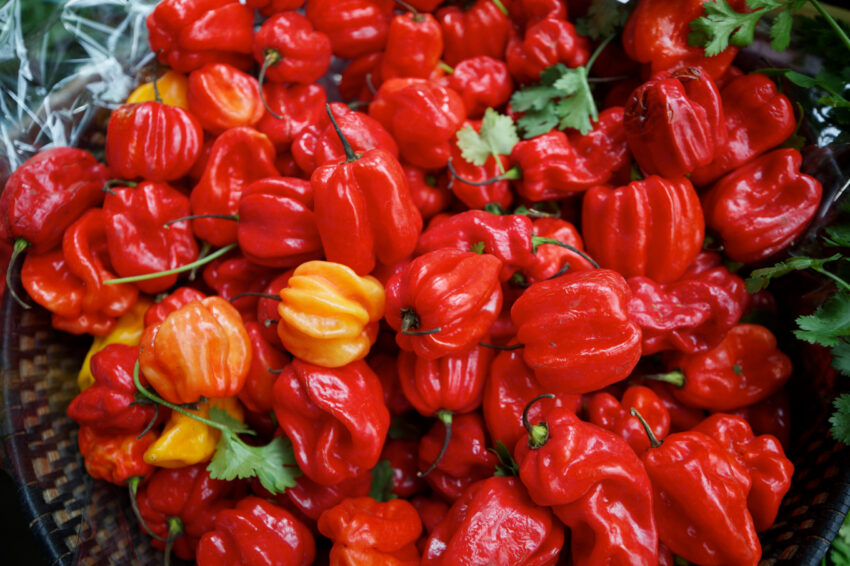
Scotch bonnet peppers are especially associated with Caribbean heat. Their flavor is fruity as well as fiery, which is why they work so well with mustard, vinegar, and tropical ingredients. Yet heat alone does not make a great sauce. A good Bajan pepper sauce should wake up the food, not flatten every flavor beneath a five-alarm blaze. For some diners, that means a few cautious drops. For others, it means a generous spoonful. It depends on the sauce, the dish, and how brave you are feeling before lunch.
From Plantation Era to Post-Emancipation Tables
Barbados’s food history cannot be separated from sugar, land, and labor. During the plantation era, meals were shaped by restricted access to ingredients as well as by the ingenuity of those who prepared them. Simple provisions, ground foods, salted meats, fish, herbs, and peppers became part of a practical, flavorful island cuisine.
After emancipation, food traditions continued to evolve across villages, markets, and growing towns. Families cultivated provisions and seasonings where they could, exchanged recipes, and made dishes that reflected both necessity and celebration. Pepper sauce was useful because it was affordable to make in batches and could add excitement to plain food, salted fish, soups, fried snacks, and Sunday meals alike.
The arrival of indentured laborers from India in the 19th century also added new dimensions to Barbados’s culinary landscape. Spices, pickling traditions, and a wider comfort with layered heat became part of the island’s shared food conversation. That does not mean every pepper sauce is Indian-influenced, or that every Bajan recipe uses the same spices. It does help explain why mustard, turmeric, garlic, and pepper can feel so at home together in a Barbados kitchen.
Why Mustard Pepper Sauce Feels So Bajan
Visitors often expect a Caribbean pepper sauce to be a thin, clear, vinegar-heavy liquid. Barbados certainly has versions in that style, including fresh pepper infusions and green sauces. But thick mustard pepper sauce is one of the island’s most recognizable expressions.
Mustard does more than give the sauce its sunny color. It rounds out the sharpness of vinegar, carries the flavor of spices, and creates a texture that clings nicely to fish, pork, sandwiches, and fried food. Turmeric may deepen the yellow hue, while onion, garlic, lime, cucumber, papaya, or other ingredients can appear depending on the maker.
This is where a visitor should resist the urge to treat all Caribbean sauces as interchangeable. Barbados shares ingredients and historical currents with its neighbors, but island food is full of distinct local preferences. Bajan pepper sauce often leans savory, mustardy, and balanced rather than simply chasing maximum heat. It has personality, not just pepper power.
The Sauce That Meets Every Bajan Meal
Pepper sauce belongs to ordinary meals as much as special ones. It appears beside cutters, fish cakes, macaroni pie, grilled fish, roast breadfruit, fried flying fish, soups, and pudding and souse. At a rum shop, a food stall, a family lime, or a neighborhood cookout, the bottle is often close at hand.
That everyday presence tells us something important. Pepper sauce is not museum food. It is living culture, adjusted constantly by the people who make and eat it. One auntie may blend her peppers silky smooth; another leaves texture in the jar. Someone else adds a touch of sugar or fruit to tame the fire. A recipe written down once may look different by Christmas.
Commercially produced sauces have made Bajan flavors easier to take home, and there is real value in that. A bottle in a suitcase can bring back the taste of a holiday long after the tan has faded. Still, the most memorable sauce is often the one served at a small local spot, made in a family kitchen, or offered by someone who insists you try just a little. That phrase is worth treating with healthy caution.
Finding the Story Beyond the Resort Table
Food makes more sense when you see the island that shaped it. In Bridgetown, old market areas and historic streets reveal the trade, migration, labor, and enterprise behind everyday Bajan life. Beyond the capital, countryside lanes, cane fields, and village communities show another side of Barbados – one where kitchen gardens and local food knowledge have long mattered.
On an eBike Barbados outing, our laid-back local guides are happy to connect those dots as the route allows: why certain crops thrived here, how communities developed around estates and parish churches, and how food carries stories across generations. You do not need to be a serious cyclist to enjoy it. Pedal assist helps mixed-ability groups handle the island’s rolling terrain together, while our team takes care of helmets, safety guidance, and pickup logistics.
The best way to taste pepper sauce is not to treat it as a dare. Put a little on first, notice the vinegar, mustard, fruitiness, or herbs, then decide whether your plate needs more. Like Barbados itself, the real pleasure is in paying attention to the layers.