The Interesting Origins of the Bajan Dialect
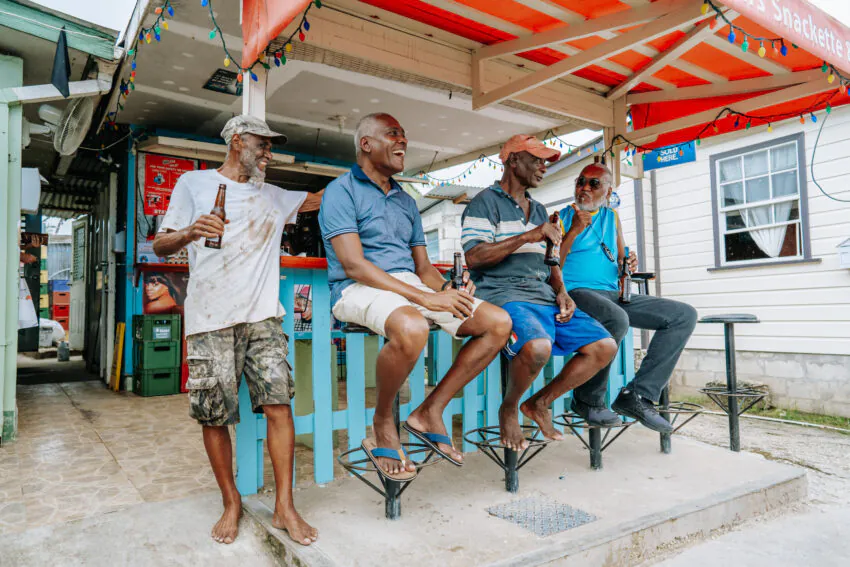

At a Bridgetown market, a roadside rum shop, or a quiet lane above the cane fields, you may hear English that sounds familiar for one second and wonderfully mysterious the next. The interesting origins of the Bajan dialect are written into that rhythm: a living record of Barbados shaped by African heritage, British colonial rule, migration, survival, humor, and a fiercely independent local spirit.
Bajan is not simply “English with an accent.” It is a Caribbean English-based creole with its own sound, vocabulary, grammar, timing, and personality. For visitors, learning to listen for it adds another layer to the island. The views at Bathsheba may stop you in your tracks, but the voice of Barbados tells you who has walked, worked, laughed, argued, and built community here for centuries.
The Interesting Origins of the Bajan Dialect
Barbados was claimed by England in 1625 and settled by the English a few years later. English became the language of government, law, landowners, churches, and commerce. But the island’s language story was never going to be a simple copy of the English spoken in England.
During the 17th and 18th centuries, Barbados became deeply tied to the sugar plantation economy. Enslaved Africans were forcibly brought to the island from many regions of West and Central Africa. They did not arrive with one shared language. People spoke a wide range of African languages, while English was the language imposed by those in power.
Out of this painful and unequal contact came new ways of communicating. English vocabulary mixed with speech patterns, meanings, and structures influenced by African languages, while speakers also shaped the language creatively to meet everyday needs. Over generations, this developed into what linguists call a creole language or creole variety. In Barbados, that variety became Bajan.
The process was not neat, instant, or identical across every plantation or parish. Language changes wherever people from different backgrounds must communicate, especially under pressure. Bajan grew in homes, fields, markets, workshops, churches, fishing communities, and family yards – places where island life carried on beyond official records and formal classrooms.
A language born from contact, not a broken version of English
One old-fashioned misconception is that creole speech is “bad English.” That idea ignores both history and linguistics. Bajan follows patterns. It has rules, although they may be different from the rules taught in a traditional English grammar book.
For example, the pace of Bajan speech can be quick and musical, with sounds shortened, joined, or softened in ways that make it hard for an untrained ear to catch every word. A visitor may hear “wunna” for a group of people, or “gine” in expressions related to going. Context, facial expression, and tone often carry as much meaning as the individual words.
That is part of the fun, but it is also part of the depth. Bajan speech can be direct, playful, teasing, affectionate, dryly funny, or politely firm, sometimes all in one exchange. A good local storyteller can turn a simple observation into a full performance without raising their voice very much at all.
African memory in Bajan speech
It would be too simple to point to one African language and declare it the source of Bajan. Barbados received people from diverse African societies, and the linguistic history involves many overlapping influences. Still, African heritage is central to understanding why Bajan developed differently from British English.
Many scholars identify African influence in the rhythm, intonation, ways of emphasizing a point, and grammatical structures found across Caribbean creoles. The tendency to make language expressive, communal, and responsive is not something that can be reduced to a dictionary entry. It is heard in conversation: a repeated phrase for emphasis, a well-timed pause, a playful nickname, or a story that gets better with every retelling.
Words also travel in unexpected ways. Some terms used in Caribbean speech have African roots, while others came through centuries of exchange among islands, sailors, laborers, and traders. Pinning down the origin of every word can be tricky. Languages borrow, adapt, and change their clothes along the way.
What is clear is that Bajan preserves the creativity of people who made culture under brutal conditions. Food, music, faith, folklore, family customs, and language all carried knowledge forward when official power tried to control nearly every part of life.
English, Irish, and island influences
English supplied much of Bajan’s base vocabulary, but the English spoken in 17th-century Barbados was not the same as modern standard American or British English. Regional dialects from England were already varied. Early Barbados also had Scottish, Irish, and other European migrants, including indentured servants, whose speech added to the island’s linguistic mix.
That does not mean every unusual Bajan word comes from Ireland or every pronunciation comes from a particular English county. Those claims are often repeated more confidently than the evidence allows. But migration mattered. Barbados was an active Atlantic port, linked to Britain, Africa, North America, and other Caribbean islands. People, goods, stories, and speech patterns moved constantly.
The island’s relative size and long-standing communities helped give Bajan a distinctive sound. Barbados is not culturally isolated, but it has had generations of close-knit parish life. A phrase can travel from a village shop to Bridgetown, pick up a sharper punchline, and become part of the shared national soundtrack.
From plantation society to a national voice
For much of Barbados’s colonial history, standard English was treated as the language of education, official business, and social advancement. Bajan was often discouraged in schools and judged unfairly by people who associated it with class and limited opportunity.
That pressure created a familiar Caribbean reality: many Bajans move comfortably between standard English and Bajan depending on the setting. A teacher may use formal English in a classroom, switch to Bajan for a joke with friends, and use a blend of both when explaining something quickly to family. This is not confusion. It is skill.
After independence in 1966, Bajan identity became even more openly celebrated as part of a confident national culture. The dialect appears in calypso, comedy, conversation, radio, cricket banter, storytelling, and everyday life. It can signal belonging in a way that no flag or brochure quite can.
Visitors will often hear standard English too, especially in hotels, museums, businesses, and guided settings. Barbados is welcoming, and people generally adjust their speech when they see someone is trying to follow along. Still, it is lovely when guests do not treat Bajan as a novelty act. Listen carefully, ask respectfully when you are unsure, and enjoy the exchange without forcing an imitation.
Why Bajan sounds different across the island
There is no single Bajan voice. Age, parish, family background, profession, neighborhood, and the situation all influence how someone speaks. An older storyteller from the countryside may use expressions a younger Bridgetown professional knows but rarely says. A fisherman on the east coast may have a cadence that feels different from the speech you hear near the capital.
Modern Barbados is also shaped by global media, tourism, migration, and digital culture. Younger Bajans may blend Bajan with American, British, and wider Caribbean expressions, just as young people everywhere remix language. That does not weaken the dialect. It shows it is alive.
Some visitors expect “authentic” culture to stay frozen in the past. Real Barbados does not work that way. The island can be deeply traditional and thoroughly modern, sometimes before breakfast.
A few words are only the beginning
You may hear “wuh gine on?” as a friendly way of asking what is happening or how things are going. “Lime” can mean relaxing and socializing, usually with good company and no urgent schedule. “Cheese on bread!” is an expressive reaction that may signal surprise, disbelief, or amusement, depending on the moment.
These are useful doorways, not a script. Trying a phrase can be warmly received when done naturally, but repeating it at every stop can feel like wearing a souvenir T-shirt for three straight days. The better approach is to let local people lead. Ask what an expression means, enjoy the explanation, and remember that tone can change everything.
Hear the dialect where the island feels most real
Bajan becomes especially vivid away from the polished resort corridor. In Bridgetown, its rhythms rise through market conversations, bus stops, old commercial streets, and the stories surrounding landmarks such as St. Mary’s Church and the Jewish Synagogue. In the countryside, the dialect moves through village shops, farm gates, trailheads, and the easy greetings exchanged between neighbors.
This is one reason small-group, Bajan-led experiences offer more than a scenic route. You may be cycling along a ridge near Hackleton’s Cliff, walking through historic Bridgetown, or pausing near the rugged Atlantic coast, and a guide’s local phrasing suddenly makes a place feel less like a pin on a map. The history becomes personal.
At eBike Barbados, our guides are happy to explain the stories behind the island’s places and the phrases you hear along the way. No lecture hall required – just curiosity, a little island breeze, and perhaps a good laugh when a Bajan expression catches you by surprise.
The next time someone greets you in Bajan, listen beyond the words. You are hearing centuries of resilience and invention carried in a voice that remains unmistakably Barbados.