A History of Clifton Hall in Barbados
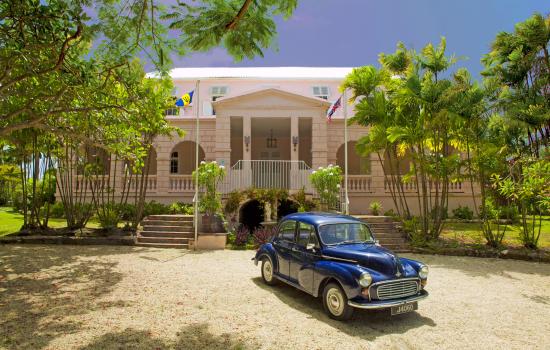

A History of Clifton Hall in Barbados
Clifton Hall sits in Barbados’s eastern countryside, where rolling cane fields, old estate roads, gullies, and Atlantic trade winds tell a far bigger story than any single great house can hold. The history of Clifton Hall in Barbados is best understood as part of the island’s plantation landscape: a place shaped by colonial expansion, sugar wealth, forced African labor, emancipation, and the communities that carried Barbados forward long after the plantation era changed.
For visitors, this is the kind of history that rewards a slower look. A handsome historic property may catch the eye first, but the real story is also in the surrounding land, the villages, the parish roads, and the people whose lives were tied to estates such as Clifton Hall for generations.
Clifton Hall in Barbados: An Estate Landscape
Clifton Hall is located in St. John, one of Barbados’s most scenic eastern parishes. This is not the flat, hotel-lined coast many first-time visitors picture. St. John rises and falls through lush countryside, with sea views, pockets of woodland, old churches, and agricultural land that has long connected the parish to the wider economy of Barbados.
Like many historic estates on the island, Clifton Hall developed within a system that made Barbados one of the wealthiest English colonies of the 17th and 18th centuries. Sugar was the engine. It transformed the landscape, concentrated land ownership, and created a society built on the brutal enslavement of African people. Any account of a plantation property that focuses only on architecture or prominent owners misses the central human reality of how that wealth was produced.
The estate name itself points to a long colonial tradition of giving Barbadian plantations English-style names. Yet Barbados was never simply a small piece of England in the Caribbean. The island’s identity was formed through African survival, skill, language, religion, foodways, family networks, resistance, and creativity. That is the Barbados visitors can still encounter in the parish communities around old estate country.
Sugar, Enslavement, and the Making of the Countryside
By the time sugar cultivation dominated Barbados, estates needed far more than cane fields. They required laborers, livestock, water management, roads, mills, boiling houses, storage areas, and housing for the enslaved people who were forced to sustain the operation. The great house was only one visible part of a much larger working landscape.
At Clifton Hall and estates across St. John, the topography mattered. Barbados’s ridges and slopes influenced where cane could be grown, how produce moved, and how people traveled between fields, villages, parish churches, and markets. Today, those same roads and rural tracks make the east and interior of the island such a rewarding place to explore by bike. The views are lovely, yes, but they are not empty scenery. They are historical terrain.
The sugar system brought tremendous profits to some landowners and merchants, while imposing violence and deprivation on the African men, women, and children it enslaved. People resisted in many ways: by preserving cultural knowledge, building family and community ties under impossible conditions, seeking freedom, and challenging the system directly. Barbados’s history cannot be told honestly without acknowledging both the plantation economy and the strength of those who endured it.
Historic estate records can be uneven, and details about ownership, construction dates, and changes to individual buildings are sometimes repeated without enough context. That is why it is wise to distinguish between the history of an estate and the age of the house visitors see today. Properties evolved over centuries. Buildings were repaired, enlarged, altered, damaged by storms, and adapted as island life changed.
Emancipation Changed the Island, Not Overnight
Slavery was abolished in the British Empire in 1834, followed by a period of apprenticeship that ended in 1838. Emancipation was a defining turning point for Barbados, but freedom did not immediately create equal access to land, wages, education, or political power. Formerly enslaved Barbadians were still living in a society where plantation owners held much of the land and influence.
For estate communities, the post-emancipation period brought difficult negotiations over labor, housing, mobility, and independence. Many families remained connected to plantation districts because work and homes were close by, while others sought new opportunities through trades, small farming, migration, domestic work, and growing village economies.
This is one reason the landscape around Clifton Hall should be read as a living place rather than a museum piece. The generations after emancipation helped shape modern Barbados. They built churches and schools, raised families, created businesses, organized for better conditions, and contributed to the island’s cultural life. The people of the countryside were never background characters in the story of the estate. They were, and remain, the heart of it.
What the Great House Can – and Cannot – Tell Us
A historic great house can offer clues about status, taste, trade connections, and the social hierarchy of its time. Its proportions, materials, verandas, shutters, and siting may reflect the practical demands of the tropical climate as well as the aspirations of those who owned it. A house positioned to catch breezes was not only pleasant – it also signaled privilege in a plantation society where comfort was unequally distributed.
But visitors should resist the temptation to treat plantation architecture as the whole story. The most important questions are often beyond the front steps. Who worked the land? Who built and maintained the structures? Where did people live? How did they preserve dignity and culture under oppression? What happened to their descendants after emancipation?
That broader approach does not make a visit less enjoyable. It makes it more meaningful. Barbados has beautiful old buildings, but the island’s greatest heritage is not frozen in coral stone. It lives in its people, speech, music, cooking, faith, humor, and fierce sense of place.
Seeing Clifton Hall With Respect
Clifton Hall is associated with private estate land, so visitors should not assume that a historic-looking property is open for casual entry. Barbados is wonderfully welcoming, but private homes and working lands still deserve privacy. The best way to appreciate this part of St. John is to enjoy public roads, viewpoints, parish landmarks, and guided experiences that interpret the countryside responsibly.
A local guide can add the context that a quick roadside stop cannot provide. You may notice a field, a ridge, an old wall, or a cluster of chattel houses and learn how they fit into the island’s story. You may also hear the kind of Bajan detail that rarely appears on a signboard – the nickname for a road, the memory of a village shop, or why a particular lookout matters to people who grew up nearby.
The trade-off is simple: if you only chase the postcard view, you may miss the history beneath it. If you spend a little more time in the countryside, listen closely, and ask thoughtful questions, St. John reveals a Barbados few visitors ever see.
Why This History Belongs on an Outdoor Adventure
The eastern side of Barbados is ideal for travelers who want more than a beach day and a souvenir stop. Its hills can be a bit lively, which is exactly where pedal-assist eBikes earn their keep. They help mixed-ability groups travel together while leaving enough breath for the stories, the scenery, and perhaps a laugh when the road decides to show off its next incline.
At eBike Barbados, our guides bring that relaxed, local storytelling approach to the trail. Historic estate country is never treated as a backdrop alone. It becomes part of a fuller conversation about sugar, freedom, village life, changing agriculture, and the natural beauty that makes eastern Barbados so memorable.
When you pass through St. John, let Clifton Hall be a prompt rather than a box to tick. Look across the fields, notice the roads curling over the ridges, and remember that every beautiful Barbadian landscape carries the work, resilience, and stories of generations. That is where the real island begins to come into view.