A Brief History of Barbados
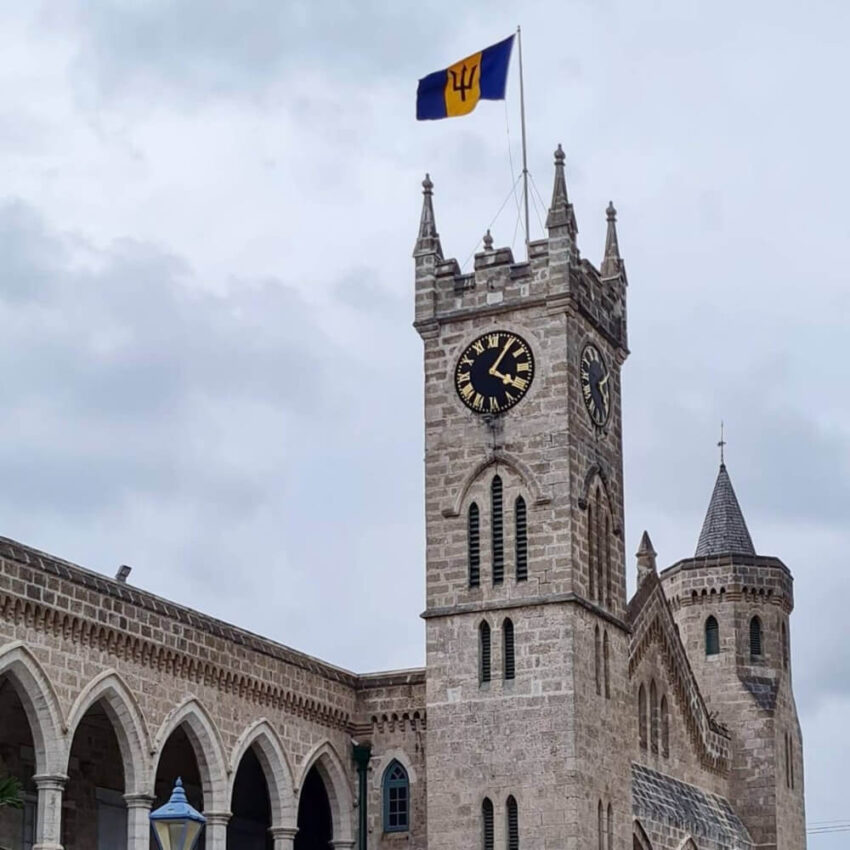

A Brief History of Barbados
A view from Hackleton’s Cliff can make Barbados look like one long sweep of forrest hills rolling toward the sea. But the history of Barbados is not a postcard story. It is a story of Indigenous seafarers, colonial ambition, forced labor, resistance, reinvention, and a people who have fiercely shaped their own identity.
The best way to understand the island is to notice how its landscape holds the evidence. A ridge can explain why a plantation stood where it did. An old churchyard can reveal the social order of another century. A busy Bridgetown street can trace routes once used by merchants, enslaved people, sailors, and market vendors. This is the Barbados that rewards visitors who take the time to look a little closer.
The History of Barbados Begins Before Britain
Long before English settlement, Barbados was home to Indigenous peoples who traveled through the Caribbean by sea. Archaeological evidence points to early settlement by Amerindian communities, including Saladoid and later Kalinago peoples. They fished, farmed, crafted pottery, and moved between islands in a region connected by trade, family ties, and expert navigation.
By the time Europeans arrived, Barbados may have had a much smaller Indigenous population than some neighboring islands, likely shaped by earlier raids and displacement. Portuguese sailors visited in the early 1500s and are generally credited with giving the island its name. “Barbados” likely referred to the beard-like aerial roots of the bearded fig trees they saw along the coast. Those trees are still part of the island’s visual character, a small living reminder that history rarely begins where a textbook says it does.
English Settlement Changed the Island Forever
England claimed Barbados in 1625, and the first English settlers arrived in 1627. At first, colonists experimented with crops such as tobacco, cotton, and ginger. The island’s future changed dramatically in the 1640s, when sugar cane became the dominant crop.
Sugar made Barbados one of England’s most valuable colonies. It also created a brutally unequal plantation economy dependent on the forced labor of enslaved Africans. Thousands of people were taken from West and Central Africa, separated from their families and cultures, and made to work in cane fields, boiling houses, and private homes under violent conditions.
The wealth generated by sugar built grand plantation houses, expanded Bridgetown’s harbor, and tied Barbados to shipping networks across the Atlantic. But it did not belong to the people whose labor created it. That truth matters when visitors admire old estates, stone windmills, or cane fields. These are beautiful landscapes, yes, but they are also landscapes of survival and struggle.
Sugar Country Still Tells the Story
Travel through the island’s interior and you can still see how geography supported the plantation system. Fertile central and eastern districts, trade winds, rainfall patterns, and access to coastal shipping all played a role. Around areas such as Malvern Plantation, PEG Farm, and the countryside roads beyond the busy south and west coasts, the scale of former agricultural Barbados becomes easier to picture.
Not every historic site has a grand signboard. Sometimes the clue is a retaining wall, an old factory chimney, a village layout, or a road that follows an older estate boundary. A knowledgeable local guide can bring these details to life without turning the day into a lecture. History is more memorable when you can see the hill, feel the breeze, and understand why people built there in the first place.
Enslavement, Resistance, and Emancipation
Enslaved Barbadians resisted in ways both visible and quiet. Some organized rebellions. Others preserved African traditions through food, music, spiritual practice, language, and community. Every act of endurance challenged a system designed to deny their humanity.
The largest uprising, known as Bussa’s Rebellion, took place in 1816. Led by enslaved Barbadians including Bussa, the revolt was suppressed, but its significance has only grown. Bussa is now honored as one of Barbados’s National Heroes, and his name stands for courage in the face of overwhelming power.
Slavery was abolished in the British Empire in 1834, though Barbados endured a further period of apprenticeship until full freedom came in 1838. Emancipation was a turning point, not an instant fix. Land, political power, education, and economic opportunity remained deeply unequal. Formerly enslaved people and their descendants continued the long work of building independent lives and demanding a voice in the island’s future.
This legacy is woven into Bajan culture. It can be heard in the island’s speech rhythms and calypso traditions, tasted in dishes shaped by African, British, Indian, and Caribbean influences, and felt in the pride Barbadians take in making something meaningful from very difficult history.
Bridgetown Was Barbados’s Front Door
For centuries, Bridgetown connected Barbados to the wider world. Its natural harbor made it a center for trade, naval activity, migration, and commerce. Merchants moved sugar, rum, and goods through the port, while people from Africa, Europe, the Americas, and elsewhere passed through its streets.
Today, Historic Bridgetown and its Garrison are recognized as a UNESCO World Heritage Site. That designation is not simply about old buildings. It recognizes an urban landscape that helped shape Atlantic history.
A walk through Bridgetown reveals layers that can be missed from a passing bus window. National Heroes Square has long been a civic focal point. Cheapside remains connected to the market life that has sustained Bajans for generations. St. Mary’s Church reflects the city’s religious history, while the Jewish Synagogue points to the role of Sephardic Jewish settlers in the early sugar economy. Swan Street, full of movement and local commerce, shows that heritage is not frozen behind glass. It is part of daily life.
The Garrison, just outside the city center, adds another chapter. Once a major British military base in the Caribbean, it includes the historic barracks of St. Ann’s Fort, parade grounds, and the famous racecourse at the Savannah. The British presence was powerful, but the island’s story cannot be reduced to British rule. Barbados has always been shaped by the people who lived, worked, traded, worshipped, protested, and created community here.
From Colonial Rule to a Republic
Barbados gained internal self-government in 1961, a major step toward political control. On November 30, 1966, the island became an independent nation within the Commonwealth, with Errol Barrow serving as its first prime minister. Barrow, another National Hero, is remembered for championing education, social development, and a Barbados directed by Barbadians.
Independence Day is more than a date on the calendar. It represents a hard-won confidence in national identity, expressed in the blue and gold flag, the broken trident, music, sport, food, and the unmistakable Bajan ability to be warm, witty, and straight to the point.
On November 30, 2021, Barbados became a republic, replacing the British monarch as head of state. The change was constitutional, but it carried clear symbolic weight. It marked another stage in the island’s ongoing effort to define itself on its own terms.
History Lives Along the East Coast Too
Bridgetown is essential, but it is not the only place to feel the island’s past. The rugged East Coast offers a different perspective. At Bathsheba, powerful Atlantic waves meet dramatic rock formations, and the terrain feels far removed from the polished resort strip. This coast helped keep parts of Barbados less intensively developed, preserving a sense of wildness that visitors often find surprising.
Along Edge Cliff, country lanes, and high viewpoints near Hackleton’s Cliff, stories of settlement, agriculture, folklore, and village life sit close together. The landscape changes quickly, from exposed ridges to shaded gullies and open fields. It also explains why Barbados is such a rewarding island to explore actively. You do not need to be an elite cyclist to reach these places, but you do need a route chosen with care, sensible pacing, and respect for the terrain.
An electric bike is especially useful on the island’s rolling roads. Pedal assist helps mixed-ability groups stay together on climbs, leaving more energy for the views and the stories. It is a gentler way to cover ground than trying to navigate unfamiliar country roads in a rental car, and it keeps the journey connected to the sounds and scents of the landscape.
Seeing Barbados With Context
There is no single version of Barbadian history. A plantation house, a cricket ground, a fishing village, and a bustling market can each tell a different part of it. The most worthwhile experiences make room for complexity: the beauty of the island alongside the hardship that shaped it, the colonial architecture alongside the people whose labor built the economy, and the celebration of independence alongside the work that continues.
When you travel beyond the beach, ask about the names of places, the crops growing beside the road, and the stories behind a village church or old cane factory. On a small-group outing with eBike Barbados, fun, laid-back local guides can help turn those questions into the kind of island memories that stay with you long after the sand has left your shoes.