Barbados Rose Ringed Parakeet in the Wild
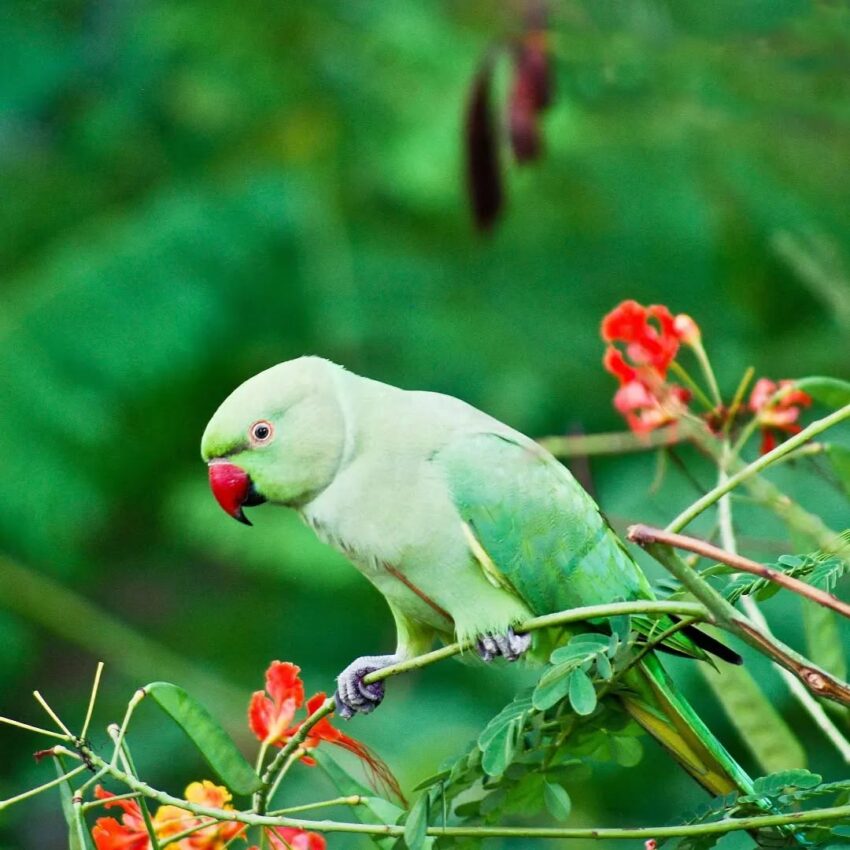

A flash of green cutting across a cane field can stop even the most dedicated beachgoer in their tracks. The Barbados rose ringed parakeet is bold, noisy, and hard to mistake once you know its call – a sharp, lively chatter that carries well beyond the trees. For visitors hoping to see a wilder side of the island, spotting one is a lovely reminder that Barbados has much more going on than sun loungers and rum punches.
These bright birds are part of the island’s changing birdlife story. They are not one of Barbados’s native species, but they have become a familiar sight in some cultivated and settled areas. Watching them with a knowledgeable local guide adds context to the moment: you are not simply ticking off a colorful bird, but seeing how people, gardens, farming, and wildlife all share a small Caribbean island.
What Does a Rose-Ringed Parakeet Look Like?
The rose-ringed parakeet is slim, long-tailed, and overwhelmingly green, which sounds simple until it zips overhead at speed. In good light, look for a red bill and a long tapered tail with bluish tones. Adult males may show the narrow dark-and-rose-colored collar that gives the species its name, while females and younger birds are usually less distinctly marked.
Their voices are often the giveaway. A small flock may arrive noisily, settle briefly in a fruiting tree, and leave as suddenly as it appeared. They tend to be social birds, so hearing several calls at once or seeing a group flying in a quick, direct line is not unusual.
Do not be discouraged if your first look is a green blur against greener leaves. That is half the fun. Pause, listen, and let the birds reveal themselves rather than chasing after them. A pair of binoculars makes all the difference, particularly in the early morning when activity is often at its best.
Where You May See the Barbados Rose Ringed Parakeet
Rose-ringed parakeets favor places with food, cover, and mature trees. Around Barbados, that can mean gardens, agricultural districts, orchard-like landscapes, wooded gullies, and the greener countryside beyond the busiest resort strips. They may feed on fruit, seeds, buds, and crops, then gather in trees to rest or roost.
That does not mean there is one guaranteed parakeet stop on the island. Birds operate on bird time, not vacation time. Seasonal food sources, weather, noise, and the time of day all shape where a flock chooses to be. A guide who spends regular time in the field can read those conditions far better than a visitor scanning a map from a hotel balcony.
The island’s east and interior landscapes are especially rewarding for travelers who enjoy looking closely. Along rural lanes, near working farmland, and on elevated routes where the trade winds move through the trees, you may find yourself listening for parakeets while also watching for herons, hummingbirds, kestrels, and other resident or visiting species. One good birding morning can turn into a proper introduction to the real Barbados.
Early Starts Bring Better Odds
Cooler morning hours are generally more comfortable for people and more active for birds. Bring water, use sunscreen, and wear light clothing in quiet colors if possible. White shirts and bright patterns will not ruin a sighting, but softer colors help you blend into the landscape a little more easily.
A small rain jacket is sensible in Barbados too. A passing shower can arrive with impressive confidence, then clear off just as quickly. The trees will sparkle, the air will cool, and the birding may improve. Island weather likes to keep everybody humble.
A Colorful Bird With a Bigger Conservation Story
It is tempting to view every bright parakeet as uncomplicated good news. The truth is more interesting. Rose-ringed parakeets have established populations in many places outside their original range, often after captive birds escape or are released. In some environments, they can compete with native birds for nesting spaces or food, and they may also cause problems for growers.
That is why responsible wildlife tourism matters. Enjoy the sighting, take the photograph, and ask questions about what local observers are seeing. But avoid feeding parakeets or trying to call them closer. Feeding changes natural behavior, concentrates birds in unsuitable places, and can create trouble for both wildlife and nearby communities.
The same rule applies to nests and roosts. Keep a respectful distance, lower your voice, and never push through vegetation to get a better image. The best bird encounters feel unhurried. You notice the bird, the wind in the palms, the landscape around you, and perhaps the local story attached to that patch of countryside.
Birding Beyond the Checklist
A parakeet sighting is enjoyable on its own, but it becomes more memorable when you understand the setting. Barbados’s landscape has been shaped by centuries of farming, trade, settlement, and movement between islands and continents. Cane fields, old estates, village gardens, gullies, and coastal woodland are not separate from the island’s history. They are part of it.
On a guided outing, a good local guide may point out a distant church tower, explain why a particular road follows a ridge, or share how a farming district has changed over generations. Then, just when the conversation turns to Bajan folklore or an old plantation route, a parakeet flock may burst from a tree overhead. That is Barbados in miniature: layered, lively, and never quite as simple as it first appears.
For active travelers, birding also pairs beautifully with gentle exploration by foot or electric bike. An eBike lets mixed-ability groups cover rolling countryside without turning the day into a fitness test, while still moving slowly enough to hear calls and stop safely when something interesting appears. The goal is not to race through the scenery. It is to have enough time to notice it.
How to Watch Birds Well on Barbados
Birding etiquette is refreshingly straightforward. Stay on established paths or roads where possible, keep clear of private property unless you have permission, and give every bird room to behave naturally. Avoid playback of calls, especially near breeding areas, since it can stress birds or draw them away from feeding and nesting.
Photography should follow the same common-sense approach. A distant image of a parakeet perched naturally is far more satisfying than a close photo gained by disturbing a flock. If the birds go quiet, shift away, or repeatedly fly from tree to tree, take the hint and give them space.
For visitors who do not travel with birding gear, a guided birdwatching experience removes the guesswork. Binoculars, local knowledge, transportation planning, and safe access to the right habitats all matter. At eBike Barbados, small-group experiences are designed to make those details easy, with island-wide pickup and drop-off so guests can spend their energy looking outward rather than figuring out the road network.
Let the Bird Set the Pace
The rose-ringed parakeet may be the bird that first catches your eye, but do not let it be the only thing you watch for. Look at the fruiting trees that attract it. Listen for the next call from deeper in the gully. Notice how the terrain shifts from open cane country to shaded lanes and then out toward the Atlantic.
Give yourself an unhurried morning, bring curiosity along with your camera, and let a bright green flock lead you a little farther beyond the beach. That is often where Barbados starts telling its best stories.