Barbados Food: Breadfruit, Fish Cakes and More

A hot fish cake in a paper bag is not a side attraction in Barbados. It is breakfast on the move, a beach-day snack, a lime with friends, and proof that some of the island’s best food comes without white tablecloths. Discovering the unique foods of Barbados, like breadfruit and fish cakes, is one of the most enjoyable ways to get closer to the real island – its fishing villages, cane-country kitchens, historic markets, and long-held family recipes.
Bajan food is generous, seasoned with confidence, and tied to place. The Atlantic supplies fish, the tropical climate supplies fruit and ground provisions, and the island’s history has shaped every plate. African, British, Indian, Irish, and wider Caribbean influences all appear in Barbados cuisine, yet the result is distinctly Bajan. Come hungry, ask questions, and do not be shy about trying the pepper sauce. Just start with a small amount. That little bottle can have big ambitions.
Barbados food begins with breadfruit and fish cakes
Breadfruit and fish cakes are an excellent introduction because they show two sides of Bajan cooking: filling, home-style starches and brilliantly seasoned seafood.
Breadfruit: more than a side dish
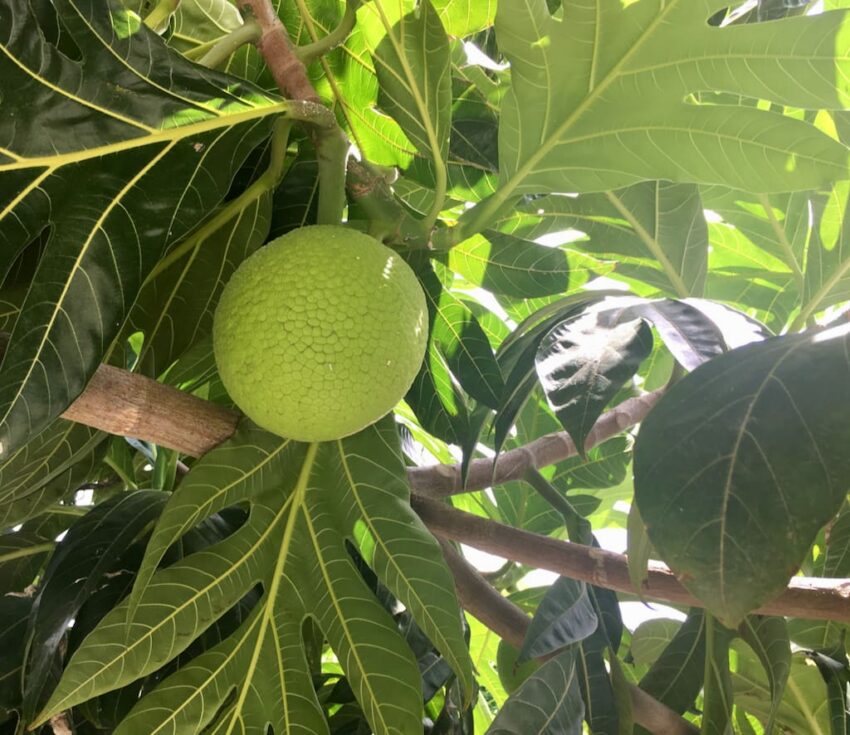
Breadfruit is a large, green, round fruit with a starchy flesh that becomes tender and satisfying when cooked. Its mild flavor is often compared to potato, though its texture can be softer and creamier. On Barbados, you may find it boiled, roasted, fried, mashed, or folded into a dish with salt fish and seasoning.
Roasted breadfruit is especially worth seeking out. When cooked over coals, the outside darkens and the inside turns warm, fluffy, and lightly nutty. It is often served alongside fried fish, stewed meat, or a hearty helping of peas. Fried breadfruit slices make an easy snack, while breadfruit cou-cou offers a more traditional, comforting preparation for anyone who wants to move beyond familiar vacation fare.
Breadfruit also carries a bigger Caribbean story. It arrived in the region during the colonial era as a crop valued for feeding large communities. Today, it belongs firmly to the island’s everyday food culture. Eating it is not just about checking off an unusual ingredient. It is a chance to taste how Barbados adapted plants, people, and traditions into something lasting.
Fish cakes: small, crisp, seriously flavorful
Bajan fish cakes are usually made with salted cod, flour, herbs, pepper, and seasonings, mixed into a batter and fried until crisp at the edges. The best ones are light enough to eat several without feeling weighed down, with little bursts of salt fish and spice in every bite.
They can appear at breakfast, at a rum shop, from a roadside vendor, or as a starter before a larger meal. Some are mild, while others bring a real peppery kick. The texture matters: a good fish cake should be golden and crunchy outside, tender inside, and never greasy.
If you see fish cakes served with a spicy dipping sauce, taste first and add second. Barbados takes its hot sauces seriously, and every cook has a different idea of what counts as “just a little heat.”
The dishes that tell a Bajan story
A food-focused day on the island can take you well beyond the resort restaurant menu. These dishes are common enough to find, but each has a story behind it.
Cou-cou and flying fish
Often called Barbados’s national dish, cou-cou and flying fish brings together seasoned flying fish with cou-cou, a smooth mixture traditionally made from cornmeal and okra. The fish may be steamed in a savory tomato-based sauce, while the cou-cou acts as a mellow, satisfying base.
Flying fish has long been central to the island’s identity, even earning Barbados its famous nickname, “the land of the flying fish.” The dish reflects coastal livelihoods and the skill of preparing fresh catch simply but well. It is a smart choice for travelers who want a classic Bajan meal rather than a generic seafood platter.
Macaroni pie
Do not mistake macaroni pie for an ordinary side of baked pasta. In Barbados, it is a beloved staple, often richer and firmer than the macaroni and cheese many American visitors expect. Cheese, spices, and sometimes a touch of mustard or hot sauce give it its character.
It is usually served with fish, chicken, or another main dish, but it has enough personality to command its own space on the plate. Every household and cook has a preferred version, which means trying it in more than one setting is research, not overindulgence.
Pudding and souse
Pudding and souse is a traditional Saturday favorite with deep roots in the island’s food culture. Souse typically features pickled pork prepared with lime, cucumber, onion, and peppers. The pudding is a savory steamed mixture, commonly made with sweet potato and spices.
This is not a dish for travelers looking only for familiar flavors, and that is exactly why it is worth considering. The tangy, spicy souse and earthy pudding reveal a practical tradition of using ingredients fully and flavoring them boldly. If a local recommends a trusted spot, take the recommendation.
Cutters and everyday snacks
A cutter is a Bajan sandwich served on a soft salt bread roll. Fillings can include fish, ham, cheese, egg, or fried fish, often with lettuce, tomato, and pepper sauce. It is quick, portable, and ideal after a morning exploring Bridgetown or a breezy countryside ride.
Look out for coconut bread, sugar cakes, tamarind balls, and sweet bread, too. These small treats are easy to share and make a good introduction to the island’s love of coconut, spices, and tropical fruit. They also travel well for a late-afternoon snack, though some may disappear before you get back to your hotel.
Where food and the island meet
The most memorable Bajan meals are often connected to the setting. A plate of fried fish tastes different near the coast, with salt in the breeze and boats returning from the water. Fresh fruit at a market feels more meaningful after seeing the green interior of the island, where fertile gullies, small farms, and cane fields have fed communities for generations.
In Bridgetown, food culture is woven into the energy of streets and markets shaped by trade, migration, and daily commerce. Around the east coast and countryside parishes, roadside stops and local cookshops can offer a slower, more personal rhythm. Menus may be simple, but the conversations are often the point. Ask what is fresh, what is popular that day, and how a dish is traditionally eaten.
This is where a small-group experience can make a difference. A knowledgeable local guide can point out the places visitors might pass without noticing, explain why breadfruit is served a certain way, or share the history behind a market district. At eBike Barbados, our guides enjoy connecting the landscape to the everyday flavors that come from it, with plenty of local stories between scenic stops.
How to eat like a thoughtful visitor
Start with local specialties, but keep your plans flexible. Some dishes are tied to a particular day of the week, a family-run kitchen’s schedule, or whatever fish came in that morning. The best meal may not be the one you planned three weeks before arrival.
Go early for popular breakfast items and market energy. If you are ordering from a busy local counter, watch what regulars choose. It is usually a better signal than a glossy menu. Ask about spice levels, particularly when pepper sauce is involved, and mention any allergies clearly. Salt fish, shellfish, nuts, and dairy can all appear in dishes that look simple at first glance.
Respect the pace of a small local food stop. Food may be cooked to order, and a little waiting is often a good sign. Instead of rushing, use the time to enjoy the neighborhood, chat with the vendor, or take in the view. Barbados is an island, yes, but it is not meant to be experienced at express-checkout speed.
Make room for the unexpected
You do not need to eat every famous dish in one day. A fish cake at breakfast, a cutter after an active morning, and breadfruit with dinner is a very fine start. Build in room for the item a local insists you try, the market fruit you have never seen before, or the roadside stall with a crowd gathered outside.
That is how Barbados begins to taste less like a destination and more like a place with its own rhythm. Follow the scent of frying fish, the sound of a busy cookshop, and the advice of someone proud to tell you what is on the plate.